












.jpg "Geometry Dash Spider")


Geometry Dash God Eater
Geometry Dash God Eater is an addictive running game with unique visual designs. Go through the form, dual, speed, and size portals and reach the finish line.
The Beginning of the Adventure
Like Geometry Dash 3D, this game also offers a challenging adventure. The opening moments of Geometry Dash God Eater immediately establish the game's high difficulty and fast-paced nature.
Ship Gameplay in Dangerous Corridors
The adventure begins with players controlling a ship. Unlike introductory ship sections found in easier games, Geometry Dash God Eater immediately places players inside narrow corridors packed with hazards. Spiky traps line the pathways while monster-themed decorations create a sense of danger from the very start. Success requires:
- Smooth flight control
- Consistent timing
- Careful altitude management
- Quick reactions
The opening sequence serves as an early warning that this game leaves little room for mistakes.
Transition Into Wave Mode
Shortly after the ship segment, players enter a wave portal. Wave gameplay dramatically changes movement mechanics by requiring continuous zig-zag navigation. In Geometry Dash God Eater, the wave section is particularly demanding due to:
- Tight corridors
- Rapid movement
- Sharp directional changes
- Limited reaction time
Players must maintain perfect rhythm while navigating through increasingly complex pathways. The transition creates an immediate spike in difficulty and sets the tone for the challenges ahead.
The Unique Challenge of Dual Wave Gameplay
One of the game's most memorable moments occurs when a dual portal appears.
Controlling Two Characters Simultaneously
The dual portal creates a second-wave character. However, the challenge goes far beyond simply managing two icons. The second wave operates with:
- Inverted gravity
- Inverted colors
- Opposite movement orientation
This means players must synchronize both characters while navigating separate paths. Maintaining focus becomes incredibly difficult as both waves move simultaneously through dangerous environments.
Why Dual Sections Are So Difficult
Dual gameplay requires a completely different mindset compared to standard Geometry Dash mechanics. Players must:
- Monitor multiple paths
- Predict upcoming obstacles
- Maintain synchronized movement
- Avoid overcorrecting mistakes
Even experienced players often struggle with dual wave sequences because they demand exceptional coordination and spatial awareness. In Geometry Dash God Eater, these segments contribute significantly to the game's Extreme Demon reputation.
Cube Gameplay and Precision Timing
Following the wave section, players transform into a cube. At first glance, this may seem like a break from the intensity, but the challenge simply changes form.
Navigating Jump-Based Obstacles
Cube gameplay introduces precision jumping sequences. Players must:
- Time jumps accurately
- Avoid spikes
- Cross dangerous gaps
- Navigate increasingly complex layouts
Every jump matters because many hazards leave almost no margin for error.
Using Jump Orbs Effectively
Jump orbs become a key component of progression. Correctly activating these orbs allows players to clear obstacles such as lava pits and elevated hazards. Mistiming an orb activation often results in immediate failure, making concentration essential throughout the entire section.
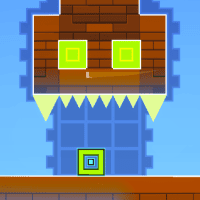
Cube character navigating dangers in Geometry Dash God Eater
The God Eater Monster and Constant Pressure
One feature that distinguishes Geometry Dash God Eater from many other custom games is the presence of its iconic monster.
A Visual Threat That Drives the Action
The God Eater creature appears throughout the game in various forms. Its enormous size and aggressive design create a constant feeling of urgency. Rather than serving as a passive background element, the monster feels integrated into the gameplay experience. Players often feel compelled to maintain momentum because the visual presentation suggests they are being pursued.
Enhancing the game's Narrative Feel
Many Geometry Dash games focus exclusively on gameplay. Geometry Dash God Eater goes further by creating a sense of narrative progression. The monster's recurring appearances help connect different gameplay sections and make the journey feel like a cohesive adventure rather than a collection of disconnected obstacles.
Increasing Complexity Through Multiple Transformations
As players progress deeper into the game, the gameplay becomes increasingly varied.
Ball Gameplay and Gravity Manipulation
The ball transformation introduces gravity-based mechanics. Players must use gravity pads and gravity changes to navigate through hazardous environments filled with spikes and narrow spaces. Success depends on understanding movement momentum and reacting quickly to changing conditions.
Robot Sections and Precision Movement
The robot transformation introduces another layer of complexity. Unlike standard cube gameplay, robot jumps vary in height depending on input duration. Players must carefully adjust jump strength while navigating:
- Gravity portals
- Tight corridors
- Acid pools
- Elevated platforms
These sections reward precision and punish hesitation.
The Climactic Endgame Challenge
Toward the latter stages of Geometry Dash God Eater, the difficulty reaches its peak.
Extremely Tight Ship Sections
The final ship sequences are among the most challenging parts of the entire game. Players must navigate through narrow gaps surrounded by:
- Spikes
- Buzzsaws
- Moving hazards
- Decorative distractions
The required precision leaves virtually no room for mistakes. Many attempts end within these sections due to their unforgiving design.
Speed Changes and Parallel Paths
Speed portals dramatically alter gameplay pace throughout the finale. Sudden speed increases force players to adapt instantly while maintaining control. At the same time, additional dual gameplay segments and parallel pathways create further complexity. Every skill developed earlier in the game becomes essential for survival.
Stunning Graphics That Elevate the Experience
While Geometry Dash God Eater is famous for its difficulty, its visuals deserve equal recognition.
Vibrant Crystal and Rainbow Themes
Many sections feature colorful environments built around:
- Rainbow effects
- Crystal structures
- Bright energy patterns
- Dynamic visual transitions
These elements create a high-energy atmosphere that keeps players visually engaged. The contrast between colorful decorations and dangerous gameplay enhances the overall experience.
Dark and Demonic Imagery
The cheerful visuals are frequently interrupted by darker themes. Players encounter:
- Monster faces
- Demonic artwork
- Intimidating visual effects
- Aggressive background animations
This contrast helps reinforce the game's central theme of danger and survival.
Cinematic Presentation
One of the most impressive aspects of Geometry Dash God Eater is its cinematic quality. The game includes:
- Dramatic flashes
- Animated background events
- Large-scale visual reveals
- Story-like transitions
A particularly memorable wave section features a highly detailed rotating design resembling three dragons arranged in a circular formation. Moments like these transform gameplay into a visual spectacle.
Controls and Platform Availability
Despite its complexity, Geometry Dash God Eater uses a simple control scheme.
Players can use:
- Left Mouse Button
- Touch controls on mobile devices
Pressing the control causes the character to jump, fly upward, or activate abilities depending on the current form. The game is playable on both PC and mobile platforms, allowing players to tackle its challenges wherever they prefer to play.
Why Geometry Dash God Eater Remains Legendary
Several factors contribute to the enduring popularity of Geometry Dash God Eater.
Exceptional Difficulty Design
The game never relies solely on impossible obstacles. Instead, it combines:
- Memory
- Precision
- Reaction speed
- Adaptability
This creates a challenge that feels demanding yet rewarding.
Creative Gameplay Variety
Like Geometry Dash Acu, this game also features an Extreme Demon difficulty. In this game, players experience nearly every major Geometry Dash mechanic within a single game. This constant evolution prevents repetition and keeps engagement high throughout the entire run.
Memorable Visual Identity
Few custom games are as visually recognizable as Geometry Dash God Eater. Its combination of rainbow aesthetics, crystal environments, and monstrous imagery creates a unique artistic style that remains memorable years after release.
Final Thoughts
Geometry Dash God Eater represents one of the most ambitious achievements within the Geometry Dash community. Created by Knobbelboy, this Extreme Demon game combines extraordinary difficulty, innovative gameplay design, and cinematic visual presentation into a truly unforgettable experience. From the opening ship sequence to the intense dual wave sections, gravity-changing ball gameplay, precise robot challenges, and breathtaking finale, every part of the game contributes to a cohesive and rewarding adventure. The presence of the God Eater monster, combined with stunning artwork and constant gameplay transformations, ensures that players remain fully engaged from beginning to end.